

Introduction
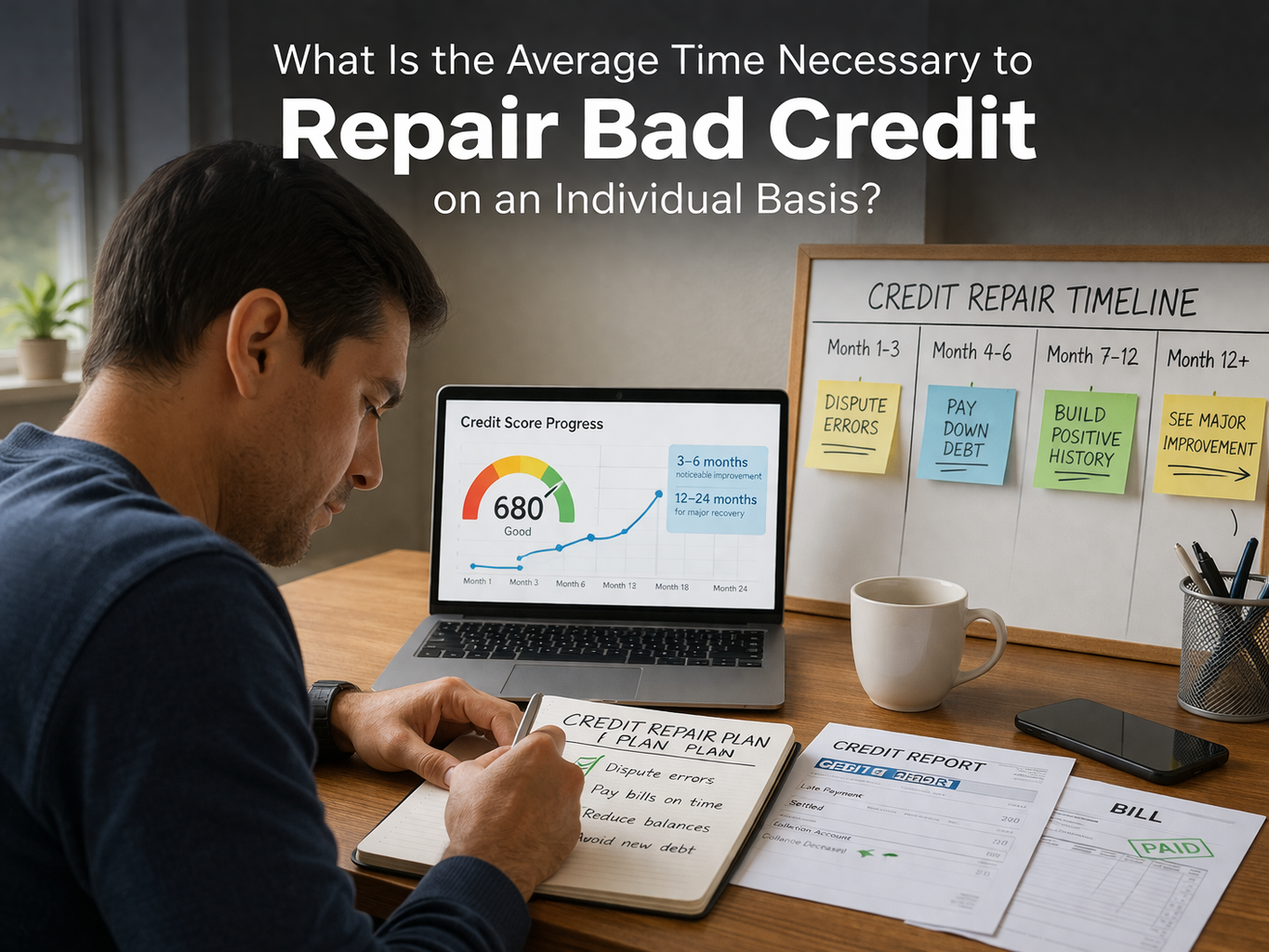
Repairing bad credit is a journey that varies from person to person, depending on the severity of the credit issues, the steps taken to address them, and the individual's financial habits. On average, it can take three to six months to see noticeable improvements in your credit score, while full recovery from significant credit problems might take 12 to 24 months or longer.
Here’s a breakdown of what influences the time required to repair bad credit:
Nature of the Credit Issues
* Minor issues (e.g., one or two late payments): These can often be resolved relatively quickly. Once late payments are caught up and on-time payments are resumed, credit scores might improve within a few months.
* Major issues (e.g., charge-offs, collections, or bankruptcy): These take longer to resolve. For example, a bankruptcy stays on your credit report for up to 7-10 years, but its impact diminishes over time with good financial behavior.
Effort to Address Issues
Proactive steps, such as disputing errors on your credit report or negotiating payment plans with creditors, can accelerate credit repair. Without active intervention, it may take longer to see improvements.
Consistent Positive Financial Behavior
Establishing good habits, like paying bills on time, keeping credit card balances low, and avoiding new debt, can lead to steady improvements. Over time, lenders will recognize the change in behavior, which positively impacts credit scores.
Frequency of Credit Report Updates
Credit bureaus typically update scores monthly, so any positive actions, such as paying down debt or correcting errors, may take one or two billing cycles to reflect in your score.
Tips to Repair Bad Credit Faster
* Review and Dispute Errors: Obtain a free copy of your credit report from AnnualCreditReport.com and check for inaccuracies.
* Stay Consistent with Payments: Timely bill payments account for about 35% of your credit score.
* Keep Credit Usage Low: Stay Below 30%
* Limit Credit Applications: Protect Your Score.
* Consider Secured Credit Cards: Use these responsibly to rebuild your credit history.
While there’s no quick fix for bad credit, taking deliberate and consistent steps can put you on the path to financial recovery. Remember, patience and discipline are key—credit repair is more of a marathon than a sprint!
Conclusion
Repairing bad credit takes time, effort, and consistency. While minor issues may be resolved in a few months, more significant challenges can take years to overcome. The key to success lies in understanding the nature of your credit issues, taking proactive steps to address them, and maintaining responsible financial habits. By regularly monitoring your credit, disputing inaccuracies, and practicing disciplined financial behavior, you can steadily improve your credit profile. Although the process may seem slow, every positive action brings you closer to achieving financial stability and regaining access to better credit opportunities. Remember, with patience and persistence, you can successfully rebuild your credit.