

Introduction
High-interest debt is one of the biggest barriers to financial freedom in the United States. Whether it’s credit cards, personal loans, or payday advances, these debts can quietly drain your income and prevent you from saving, investing, or building long-term wealth.
If you feel stuck in a cycle of debt, you’re not alone—but the good news is that with the right strategy, you can take control and move toward a debt-free future.
Why High-Interest Debt Is So Dangerous
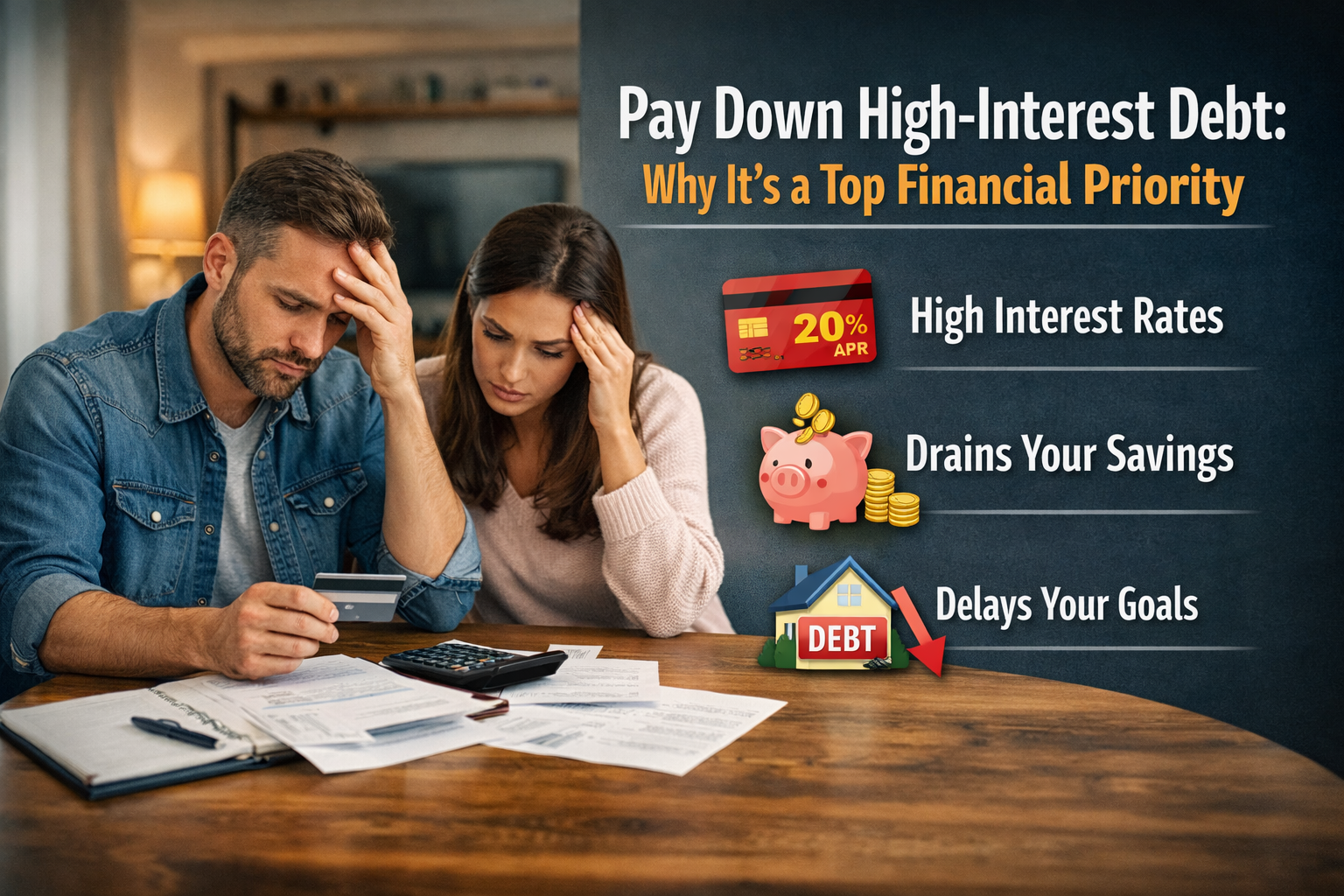
In the U.S., credit card interest rates often exceed 20% APR, making them one of the most expensive forms of borrowing.
For example, carrying a $5,000 balance could cost you over $1,000 per year in interest alone. That’s money that could have gone into savings, retirement funds, or investments.
High-interest debt grows quickly, and if left unchecked, it can:
• Reduce your ability to save
• Lower your credit score
• Increase financial stress
• Delay major life goals like buying a home
Best Strategies to Pay Off Debt Faster
When it comes to eliminating debt, choosing the right repayment strategy can make a huge difference. Two of the most effective methods are:
Snowball Method (Best for Motivation)
Start by paying off your smallest debt first, while making minimum payments on others.
Once the smallest debt is cleared, move to the next one. This approach creates steady progress and boosts motivation through small, early successes.
Avalanche Method (Best for Saving Money)
Prioritize clearing the debt with the highest interest rate first, no matter the balance size, to reduce the total interest you pay over time.
This method reduces the total interest you pay over time, making it the most cost-effective strategy.
Debt Consolidation Options in the USA
If you're managing multiple debts, consolidation can simplify your finances and potentially lower your interest rates.
Balance Transfer Credit Cards
Many U.S. credit cards offer 0% APR for 12–18 months, allowing you to pay down debt without interest (for a limited time).
Personal Loans
Fixed-rate personal loans can help you combine multiple debts into a single monthly payment with a predictable schedule.
Debt Management Plans (DMPs)
Non-profit credit counseling agencies can help negotiate lower interest rates and create structured repayment plans.
Ways to Become Debt-Free on a Low Income
Managing debt with limited income can be difficult, but with the right strategy and consistency, it is completely achievable.
Here are practical tips:
• Create a strict budget and track every expense
• Cut non-essential spending (subscriptions, dining out, etc.)
• Increase income through side hustles or freelancing
• Use extra money wisely (tax refunds, bonuses, gifts) to pay down debt
• Make consistent payments, even if they’re small
Remember, consistency matters more than the amount.
Tips to Stay on Track
• Stay away from new borrowing until your current debts are fully cleared.
• Set realistic monthly repayment goals
• Automate payments to avoid late fees
• Celebrate small milestones to stay motivated
Final Thoughts
Paying down high-interest debt isn’t just about saving money—it’s about reclaiming your financial independence.
Once you eliminate this burden, you free up your income to invest, save, and build a more secure future. No matter which repayment strategy you follow, taking action early and maintaining consistency is the most important step toward becoming debt-free.