
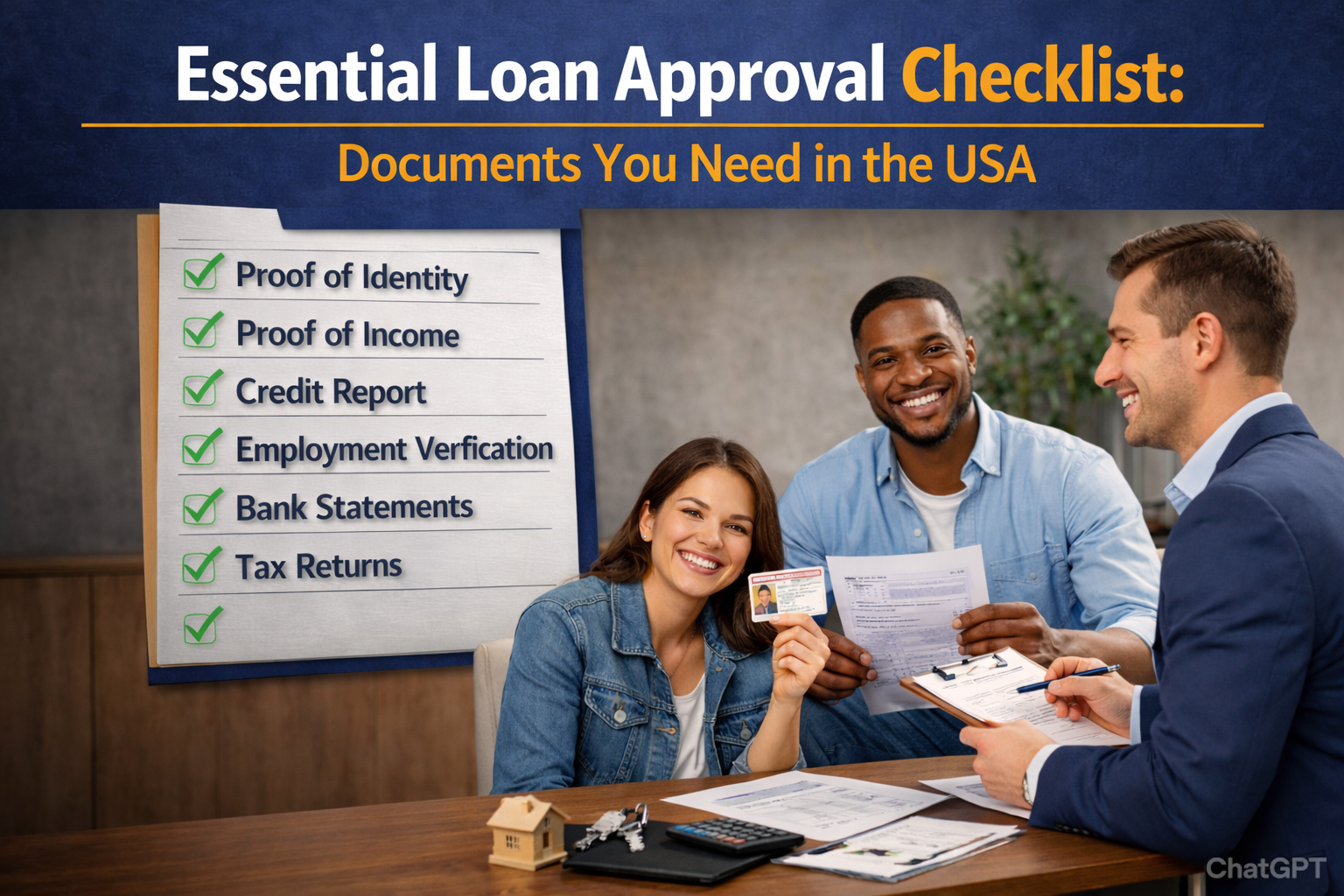

Introduction
Getting a loan approved in the United States requires proper preparation and documentation. Whether you're applying for a personal loan, mortgage, or auto loan, having the right documents ready can speed up the process and improve your chances of approval.
Here’s a comprehensive guide to the documents you need to secure a loan in the USA:
Personal Identification Documents
Lenders need proof of your identity to verify you are who you claim to be. Common documents include:
• Official Photo Identification
• Social Security Number (SSN) or Individual Taxpayer Identification Number (ITIN)
• Proof of citizenship or legal residency (e.g., Green Card or Visa documents, if applicable)
Proof of Income
Your income assures lenders that you have the ability to repay the loan.The required documentation depends on your employment type and financial situation:
For Salaried Employees
• Recent pay stubs (last 2–3 months)
• W-2 forms (last 1–2 years)
• Employer contact information
For Self-Employed Individuals
• Tax returns (last 2–3 years)
• Bank statements (last 3–6 months)
• Profit and loss statement or business income proof
For Retirees or Unemployed Individuals
• Social Security benefits letter or pension statements
• Bank statements showing other sources of income
Credit Report
Lenders will often request access to your credit report, which contains your credit score and history. While you don’t typically need to provide this yourself, you can:
• Obtain a free credit report from AnnualCreditReport.com to ensure there are no errors.
• Dispute inaccuracies beforehand to improve your creditworthiness.
Proof of Employment
Employment verification is often required, especially for large loans. You may need:
• Employment Verification Letter
• Contact details of your employer for direct verification.
Debt and Financial Obligations
Lenders assess your existing financial commitments to determine your debt-to-income (DTI) ratio. Be ready to share:
• Monthly expenses (e.g., rent, utilities, and other loan payments).
• Outstanding debts (e.g., credit card balances, student loans, car loans).
Proof of Assets
Some loans, such as mortgages or large personal loans, require proof of assets as collateral or financial stability:
• Bank statements (savings, checking, or investment accounts).
• Proof of property ownership (if applicable).
• Valuation of significant assets like vehicles, stocks, or other investments.
Loan-Specific Documentation
For a Mortgage Loan
• Proof of down payment (bank statements showing saved funds).
• Home purchase agreement (if already finalized).
• Property tax and homeowner’s insurance documentation.
For an Auto Loan
• Proof Vehicle information (make, model, year, VIN).
• Dealer’s purchase agreement or quote.
For a Personal Loan
Statement of purpose (optional but strengthens your application, especially for unsecured loans).
Co-Signer Documents (if applicable)
If you have a co-signer, their financial details will also be needed:
• Co-signer’s government ID and Social Security Number.
• Proof of income and employment.
• Credit report of the co-signer.
Other Miscellaneous Documents
Additional Documents May Be Required by the Lender
• Co-signer’sResidential Address Verification Documents
• Divorce decrees or child support statements (if applicable).
Tips to Improve Loan Approval Chances
Organize Your Documents
Ensure all paperwork is up-to-date and legible.
Check Your Credit Score
A higher credit score improves approval odds and lowers interest rates.
Reduce Your Debt-to-Income Ratio
Pay down debts to demonstrate financial stability.
Compare Lenders
Look for lenders with favorable terms and less stringent requirements.
Conclusion
Preparing the right documents is the key to getting your loan approved quickly and without hassle. By staying organized and ensuring your financial records are in order, you can make the process smoother and increase your chances of success.
Ready to apply for a loan? Start gathering your documents today and take the first step toward achieving your financial goals!